
Agriculture is shifting from being seen as a climate problem to becoming a climate solution. However, many in government and wider public bodies are yet to understand that farming now holds the key to reaching our net zero ambitions. Bennamann’s innovative technology demonstrates how livestock farming can achieve net zero, regenerate soils that have been spoiled by fifty years of chemical fertilisation and create new revenue streams by turning waste into valuable energy.
Recent research shows that methane from slurry management actually exceeds enteric emissions from cows themselves. Yet, what was once viewed as a costly burden can now become a profitable resource. Bennamann’s circular approach captures this fugitive methane, preventing a greenhouse gas 80 times more potent than CO₂ from entering the atmosphere while creating farm-generated fuel.
Dairy farming solutions
By covering existing or new slurry lagoons, Bennamann’s Smartcover system isolates the manure waste from air and water, capturing fugitive methane that would otherwise escape. The harnessed gas is then treated and cleaned to biogas standard, then upgraded to biomethane and stored in bottles for flexible use.
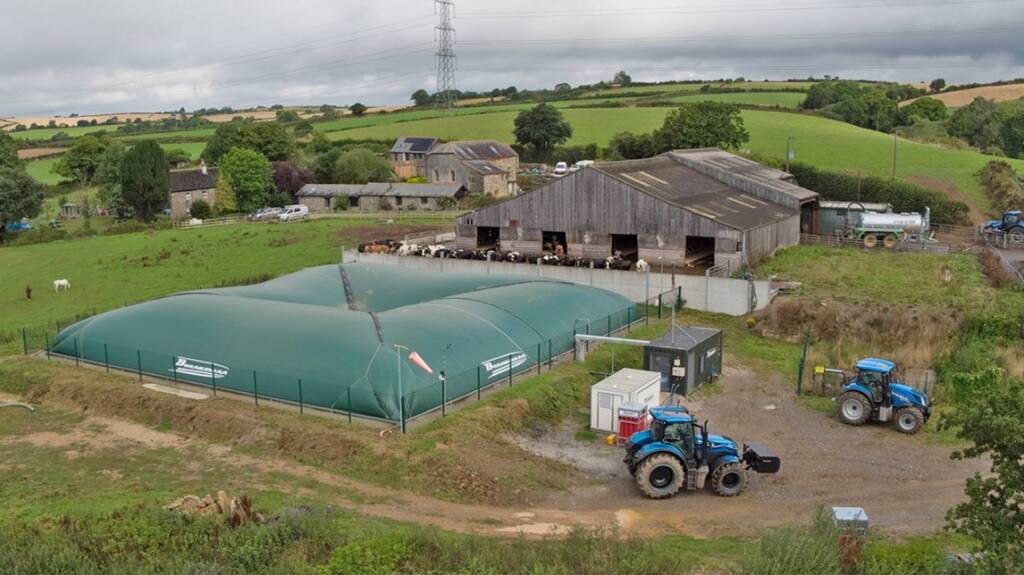
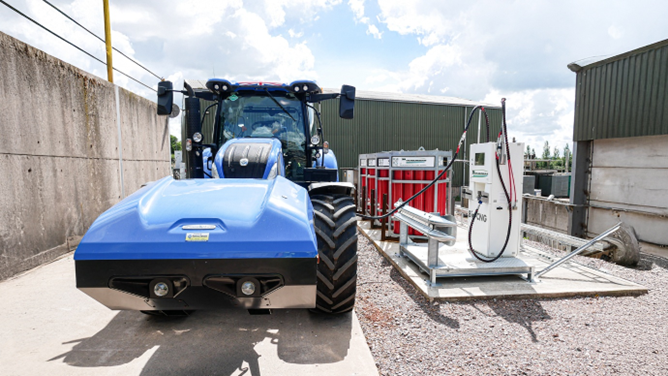
Farmers can use this on-site biomethane to power milking parlours, robots, heating systems and even household appliances. This same fuel can run tractors and lorries equipped for biomethane use, including New Holland’s T6 and T7 methane tractor models. Excess gas can serve neighbouring properties or be transported anywhere in compressed form.
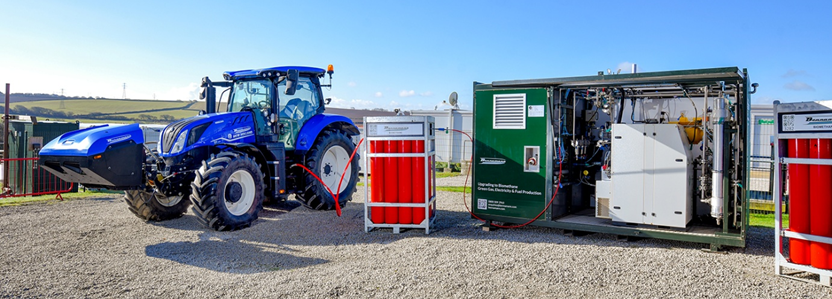
The energy operates entirely off-grid, both in production and consumption. The remaining digestate, manure minus the gas, can be used as an unbeatable natural fertiliser. By preventing rainwater contamination, farmers gain significant storage capacity and can spread the resulting fertiliser when the soil actually needs nutrients rather than when storage runs out. This concentrated fertiliser reduces farmers’ need to rely on chemical fertiliser often by up to 50 or 60%. This enables the soil to regenerate within one to two years and produce high-quality silage, thus replacing the expensive feed that the farmer was needing to pay for.
Anaerobic digestion (AD) farm upgrades
Existing AD plants that produce biogas (50-70% methane content) typically still rely on fossil energy for operations. Bennamann’s mobile bio-upgrading technology changes this equation.
The technology increases biogas production slightly while upgrading the relevant additional portion to biomethane for running farm machinery, meeting electricity requirements at better prices than grid supply or exporting bio-CNG to others . The additional biomethane produced can also power boilers for heating livestock buildings such as those used for housing poultry or swine.
Measurable results
Bennamann solutions deliver tangible benefits across multiple areas:
- Cost reductions: Stabilised and reduced costs for electricity, diesel, chemical fertiliser, high-quality feed and heating;
- New revenue streams: Income from energy sold to the local community and local authorities;
- Sustainability credentials: External audits demonstrate net zero being achieved on the farm and carbon-free milk production on dairy farms;
- Improved farm environment: Enhanced hygiene for animals and humans, plus significant odour reduction;
- Time savings: Reduced time spent on waste spreading for the farmer.
Beyond the farm gate
Agriculture accounts for 49% of UK methane emissions, according to UK Government data from 2022. With methane being 80 times more potent than CO₂ over a 20-year period, and the UK committed to the Global Methane Pledge requiring 30% emission reductions by 2030 from 2020 levels, capturing agricultural methane is not optional for reaching net zero.
Data for EU Member States shows a similar picture: the agricultural sector is the largest source of methane emissions in the EU, responsible for about 53–54% of the EU’s human-caused methane output, mainly from livestock enteric fermentation and manure management (including slurry). Agricultural methane, like in the UK, represents as much as 97% of EU agriculture’s greenhouse gas emissions profile comprising livestock enteric fermentation and manure management and all farming nitrous oxide from soils (reference).
True circularity in action
Bennamann’s complete solutions, already operational in the UK and soon to launch across Europe, demonstrate genuine circularity where agricultural waste becomes a valuable resource. Farm waste transforms into fuel for vehicles and equipment, digestate returns to fields as organic fertiliser, carbon intensity drops dramatically, and farmers gain energy independence without requiring massive grid infrastructure investment.
This is not about marginal improvements. When tractors run on biomethane from slurry feedstocks, the carbon footprint becomes entirely neutral. Technologies that make biomethane mobile, flexible and immediately deployable do not just support decarbonisation; they accelerate it, turning agricultural assets into distributed energy resources serving both farm operations and broader community needs.